
Choose Downtown for the easiest connections, Old Montreal for historic sights or the Plateau for neighbourhood life—but check the exact address.
Compare Old Montreal, the Plateau and Downtown by transit, walking, winter convenience and nearby sights before booking a car-free stay.
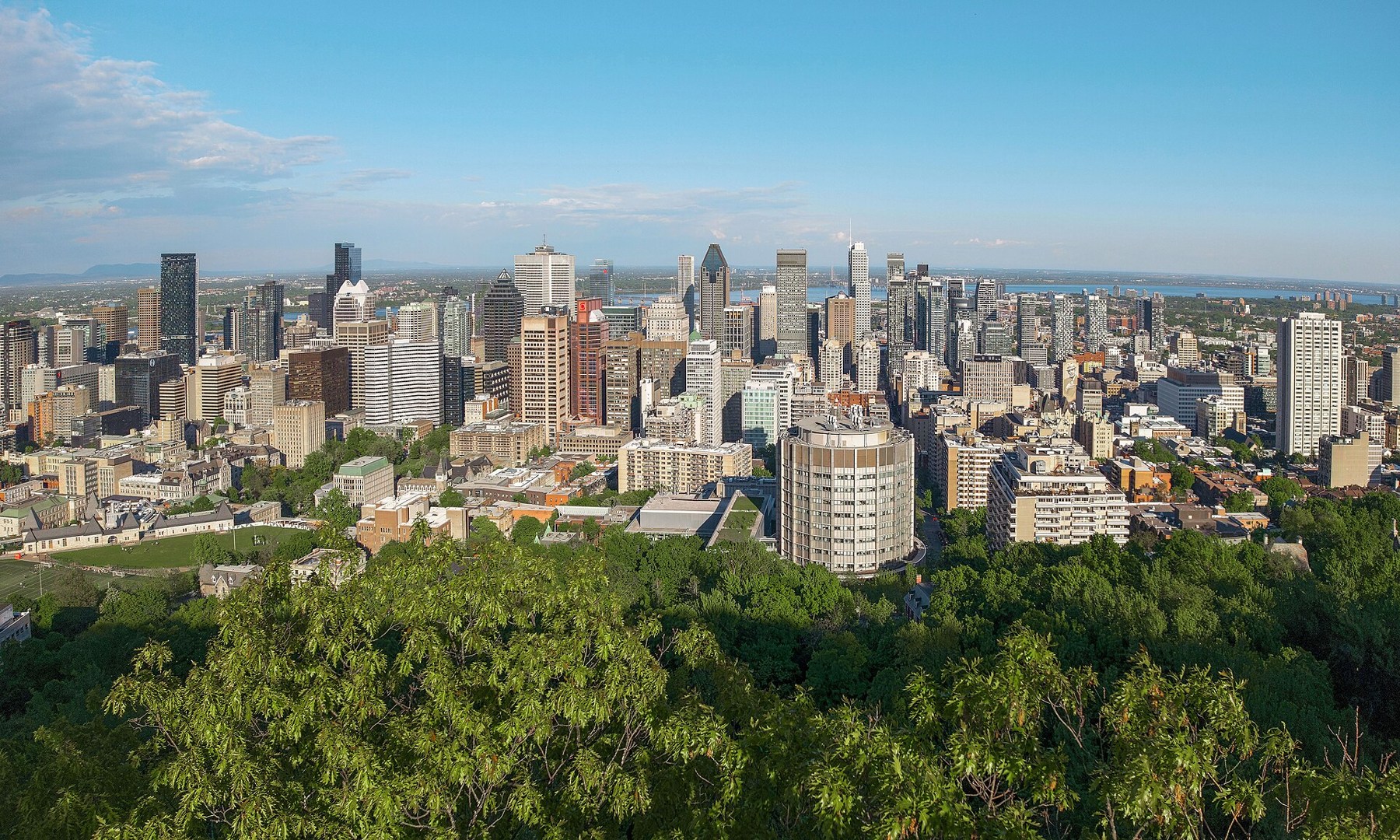
All three areas can work without a car. The useful question is what you want outside your door—and how far the exact property is from a métro entrance.
- Choose Downtown for the easiest all-round base: it has the broadest choice of nearby métro stations, major museums and performance venues, and some indoor connections.
- Choose Old Montreal for a sightseeing-focused stay: historic streets, Notre-Dame Basilica and the Old Port are close, but trips elsewhere usually begin at one of three Orange Line stations.
- Choose the Plateau for neighbourhood life: cafés, parks, bars and residential streets are part of the appeal, but an address near Mont-Royal station is much more convenient than one deep in Mile End.
If convenience matters most, start with Downtown. Choose Old Montreal for the historic setting or the Plateau when spending time around your accommodation is part of the trip.
The three areas at a glance
| Area | Best for | Car-free advantage | Main compromise |
|---|---|---|---|
| Downtown | First visits, museums, concerts, shopping and train connections | Several useful métro stations and many central destinations | More commercial; atmosphere and noise vary by block |
| Old Montreal | History, architecture and the waterfront | Major historic sights are close together | Cobblestones and fewer métro approaches |
| Plateau | Cafés, nightlife, parks and residential streets | Strong neighbourhood experience around the accommodation | Convenience varies sharply with the address |
These are broad areas, not single points. A less atmospheric room five minutes from the métro may be more useful than a favourite-looking property at the far edge of the same neighbourhood.
Downtown: the easiest default
Downtown suits a trip with plans spread around Montreal. The Green Line crosses the core through Guy-Concordia, Peel, McGill and Place-des-Arts, while Orange Line stations including Bonaventure and Square-Victoria–OACI serve its southern edge. The official STM network maps show the métro lines, downtown bus routes and individual station-area maps.
This base puts the Montreal Museum of Fine Arts, McGill University, the Bell Centre, Sainte-Catherine Street and Quartier des spectacles within or close to the core. Tourisme Montréal describes Downtown as a compact commercial district containing major art museums and Quartier des spectacles.
Downtown has a qualified advantage in bad weather. The city says the underground pedestrian network, RESO, extends across much of Downtown and links métro access with hotels, shops, offices and other destinations. It does not follow that every downtown hotel has an indoor route: check the property’s actual connection on the city’s RESO information and map.
Useful locations:
- McGill or Peel: shopping, the art museum and a central position on the Green Line.
- Place-des-Arts: performance venues, festival sites and Green Line access.
- Bonaventure: Gare Centrale and the Orange Line.
- Square-Victoria–OACI: a practical bridge between Downtown and western Old Montreal.
Main tradeoff: Downtown’s office, university, shopping and entertainment blocks do not share one atmosphere. Check the exact street and recent accommodation reviews if evening noise matters.
Old Montreal: put the historic centre first
Old Montreal places Notre-Dame Basilica, Place d’Armes, Pointe-à-Callière and the Old Port in a compact sightseeing area. Tourisme Montréal identifies cathedrals, museums, galleries and riverfront paths among the quarter’s attractions—and notes its cobblestone streets.
The best station depends on which part of the district you book:
- Place-d’Armes: the strongest general choice for central Old Montreal and Notre-Dame Basilica.
- Square-Victoria–OACI: useful for the western end and walking into Downtown.
- Champ-de-Mars: the relevant Orange Line station for the eastern end, including addresses toward Bonsecours Market.
All three are on the Orange Line, as shown on the STM métro and station-area maps. That line also serves Sherbrooke, Mont-Royal and Laurier in or beside the Plateau, so many cross-city trips do not require a transfer.
Old Montreal makes most sense when history, architecture, restaurants and the waterfront dominate the itinerary. It is a less efficient base if most plans are around the Plateau, Mile End or Mount Royal: the historic setting then comes with a station walk at both ends of many days.
Cobblestones and other uneven surfaces also deserve attention if you use a wheelchair, push a stroller or have heavy luggage. Métro accessibility varies by station. The STM’s elevator guide maps equipped stations, provides accessible trip planning and advises checking elevator status in real time. Confirm the complete route as well as the accommodation entrance before booking.
The Plateau: choose the address carefully
The Plateau is the strongest fit for travellers who want cafés, restaurants, bars, parks and residential streets around their accommodation. Tourisme Montréal characterizes this large area by its colourful houses, exterior staircases, commercial strips, cafés and nightlife; its Plateau and Mile End overview also shows why “Plateau” alone is too broad a location description.
For straightforward métro access, search around these Orange Line stations:
- Sherbrooke: convenient for the southern Plateau and a shorter ride toward Downtown and Old Montreal.
- Mont-Royal: a useful general base around Avenue du Mont-Royal and nearby residential streets.
- Laurier: suited to the northern Plateau and the approach to Mile End.
Mile End extends west of the Orange Line. Many addresses there remain practical by walking and bus, but they do not offer the same métro convenience as accommodation beside Mont-Royal or Laurier station. Test the exact listing rather than treating “Plateau” and “Mile End” as interchangeable transit descriptions.
The Plateau also works well for Parc La Fontaine and for spending unplanned time close to your base. The compromise is additional travel to Gare Centrale, Old Montreal and some Downtown attractions. Check the floor and entrance details too: the exterior staircases associated with the area’s architecture may be inconvenient with luggage or limited mobility.
A practical booking test
Before paying, enter the property’s exact address in the STM trip planner and test journeys to three places you expect to visit. Then check:
- The actual walking route to a station entrance. A straight-line distance can hide an inconvenient approach.
- Transfers. A longer walk to a direct line may be preferable to a shorter walk followed by a transfer.
- The full accessible route. Check elevators at both stations and their live service status, not just whether the hotel has a lift.
- Property steps and room location. This matters particularly in converted buildings and accommodation with exterior stairs.
- Indoor access claims. “Near the Underground City” is not the same as a direct connection.
For the least complicated base, choose Downtown near a station that fits your plans. For the strongest historic setting, choose Old Montreal near Place-d’Armes, Square-Victoria–OACI or Champ-de-Mars. For neighbourhood-focused days, choose the Plateau—but prioritize an exact address near Sherbrooke, Mont-Royal or Laurier unless you are comfortable relying more on buses and walking.